One syllable: Splott

This essay was first published in the programme for the National Theatre’s 2023 production of Romeo and Julie by Gary Owen.

The most memorable thing about the Cardiff district of Splott is its name. Even in Cardiff, it’s sometimes the subject of some mirth. Outside the city, it can draw derision and act as another example of the oddities of Wales. But, for those who live there, the name is part of the district’s special character.

Where it comes from is unclear. In the medieval period, the church owned the land leading to the fanciful claim that Splott is a corruption of God’s Plot. Another popular myth is that it is a corruption of ysblad, a Welsh word for land by a marsh. More likely though is that it is an old English name for a plot of land and Splott was also used as a fieldname in other parts of Wales once settled by the English. Whatever its root, the quirkiness of the name was added to by the 19th-century habit of calling the area Splottlands. This grander name was immortalised in the name of a local pub, but it never stuck and even many Victorians preferred the simpler, one-syllable Splott.

For centuries, Splott was coastal marsh and farmland but, as Cardiff grew in the middle of the 19th century with Wales’ industrial boom, streets began to be built on fields. The area was formally made part of Cardiff in 1875, when the town’s boundaries were expanded. Splott’s flat land and vicinity to the railway and docks meant the area became home to industrial plants that processed or made goods such as copper, malt, creosote, bricks and tar. 

Industries needed workers and Splott evolved into a working-class suburb, physically near the centre of Cardiff but, psychologically, a place apart.  The area’s development was so rapid that drainage, sewerage and stink were all noted problems. The mud could be so thick on the streets that a newspaper reported a story of a woman and child getting stuck in it. In such conditions, the threat of cholera was strong, adding to the sense that this was not a pleasant place to live. In 1890, one newspaper called South Splottlands and neighbouring Adamsdown a ‘notorious district’ in need of better policing. Amongst the noted problems were keepers of ‘disreputable houses’ relocating there from the town centre and boys rushing on to the railway to collect coal that had fallen from wagons. The council was told that at night people felt helpless to resist attacks on themselves and their property.

It was the 1891 opening of the huge East Moors works, which manufactured first iron and then steel, that really came to define Splott. The location was chosen because it was near the docks, which saved on the costs of moving materials when compared with the old ironworks near Merthyr, owned by the same company. East Moors became Cardiff’s largest employer and it attracted to Splott men from both Ireland and the Welsh mining valleys. This created a cosmopolitan society but added to prejudices in the rest of the city towards the place.

The people that lived in the shadow of the steelworks were poor. Their lives were plagued by the smoke and pollution that the steelworks belched out. In such conditions, keeping anything clean was a daily challenge. Yet these were also proud communities, with parks, churches, chapels, and football and baseball teams. There was even a university settlement where students came to live amongst and help the poor in the typical, well-meaning but patronising fashion of the time.

But whatever Splott’s reputation, it was not just home to the less well off. The bigger, solid houses, marked out proudly by their bay windows, on the eastern side of Splott testified to the presence of better-paid skilled workers. Splott Road was a bustling commercial centre and home to an array of tradesmen, shopkeepers and professionals.

But it was the steelworks that continued to define the skyline and image of Splott. It was redeveloped in the 1930s into one of the most modern plants in the world. By the 1970s, it employed 4,600 people. Jobs there now paid well but the works was outdated and struggling against increased international competition and a global economic downturn. Its closure was announced in 1972 and production was gradually wound down over the next six years. The city authorities began to consider how Cardiff’s economy could be rebuilt on post-industrial lines. This sparked the process that led to the redevelopment of the docks into Cardiff Bay. Splott’s loss became the city’s gain.

It was not just jobs that disappeared at East Moors. The nearby streets were still characterised by Victorian conditions. Many were damp and badly ventilated. In 1971, 63 per cent of homes in Splott had no inside toilet. By then, compulsory slum clearances had begun. Whole streets continued to be demolished and, by the end of the decade, more than 1,100 houses had been knocked down and around 5,300 people had to relocate. 

Not everyone had wanted to move. Not everyone liked their home being labelled a slum. Some argued the heart had been ripped out of Splott. But the young often wanted to move elsewhere for their futures. Even in 1981, more than one in five homes in Splott still did not have an inside toilet.

A new revival or threat, depending on your perspective, came in the 1990s when the house price boom led people from other parts of the city to move to Splott in search of affordable housing. Yet it still does not feel very gentrified. Once grand pubs like the Moorlands Hotel are now flats rather than trendy bars. Parts of Splott are still amongst the most deprived neighbourhoods in the country according to the Welsh Index of Multiple Deprivation.

Yet this poverty is often forgotten and out of sight in a vibrant capital whose outward face is its city centre stadium and its redeveloped docklands, now home to a grand arts centre and the Welsh Parliament. Wales has moved on from its docks, mines and metal works and the once-industrial communities on whose backs the Welsh nation was forged can seem forgotten.

Indeed, people are often not quite sure where exactly Splott is. For the Victorians, the term had covered a wide area south of the main railway line to London. But, as the area developed, its boundaries became more defined and neighbouring districts of Tremorfa and Adamsdown developed their own distinct identities. But the areas still merge into one another, and the boundaries are particularly unclear to those who have moved in.

Splott Beach, for example, is actually in Tremorfa. But maybe that does not have quite the same ring. Wherever it is, it is a unique spot. Indeed, referring to it as a beach is surely tongue-in-cheek, since it is mostly mud, bricks and rubble. The steelworks used to dump molten slag there, which occasionally exploded when it came into contact with cold water. When the steelworks itself was demolished, parts of it were dumped there too.

It might be a peripheral place that few residents of Cardiff have visited, but, in that regard, it reflects Splott itself. Indeed, while the mud of Splott Beach might seem unappealing at first, look more carefully and you will find birds and insects. Look amidst the rubble, concrete and slag, and there are bricks emblazoned with manufacturers’ names, relics of an industrial age. Look more closely still and you will see it is a place brimming with life, character and history.

Image: Near Splott Beach by Gareth James (reproduced under Creative Commons)

Martin Johnes is Professor of Modern History at Swansea University. His books include Wales: England’s Colony? (2019) which turned into a BBC television series.
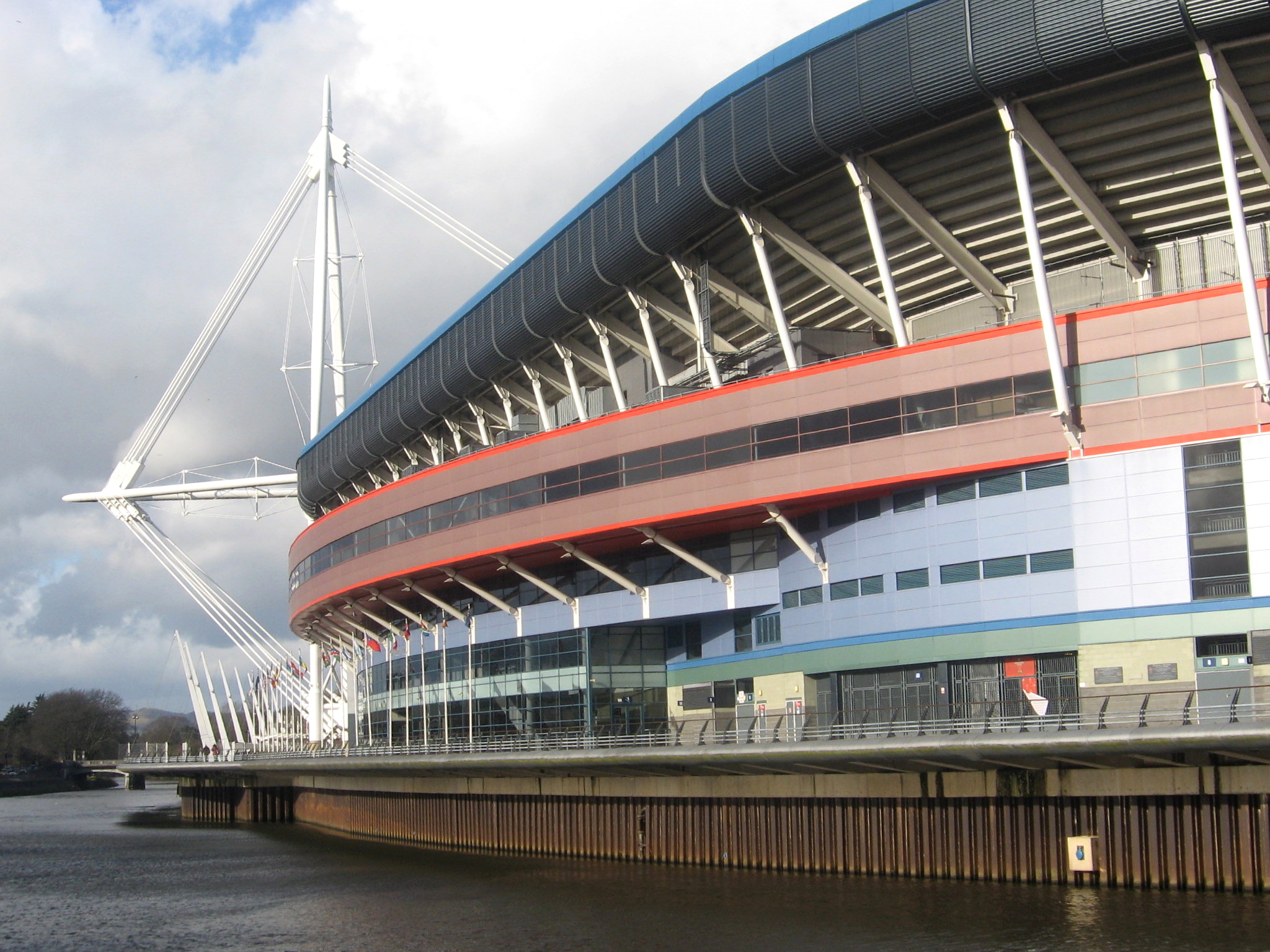
The genesis of the Millennium Stadium

https://www.goodfreephotos.com/albums/wales/cardiff/millenium-stadium.jpg

Photo via <a href=”https://www.goodfreephotos.com/”>Good Free Photos</a>

By the 1990s South Glamorgan County Council (SGCC) wanted to turn Cardiff into a European city of the stature of Cologne, Copenhagen, Seville or Barcelona through a long-term strategy known as Euro-Capital 2020.  The aspiration was to develop Cardiff into a city that could compete for investment on a European platform by raising its international profile and creating a quality of life comparable with Europe’s most desirable cities. The policy was an attempt to embrace the move towards a single European market, to be prepared for the possible advent of devolution under a future Labour government, and to encourage the people of South Glamorgan to share in the vision.

Becoming a city of European worth meant developing the cultural, environmental and physical characteristics of continental cities.  A first step was the redevelopment of Mill Lane, a downmarket street at the bottom of the central shopping district.  Although Wales does not enjoy the same weather conditions as southern Europe, the street was transformed, with SGCC’s aid, into a café quarter, complete with fashionable restaurants and pavement tables.  This was a popular and commercially-successfully project, but it was far too small to promote Cardiff into the European league of capitals.  Instead, the central tenet of the 2020 project became the Millennium stadium. This was a project whose genesis owed more to external factors that the European capital vision, but it did give Cardiff a facility of true world-class quality.

In 1992 Barcelona hosted the Olympics and the event was perceived to have been central to the city’s successful regeneration. It became something of an inspiration to Cardiff and other cities across Europe and longterm ideas of sport as a major driver of urban renewal began to seem more concrete. Cardiff had already unsuccessfully bid to host the 1986 Commonwealth games.  Although the near-corrupt practices of that process had disillusioned South Glamorgan County Council, sport remained in the council’s thinking as it looked to promote Cardiff as a vibrant capital city of European status.

The initial impetus for a new stadium came from the Welsh Rugby Union’s plans to bid to host the 1999 rugby world cup.  The SGCC leadership supported the planned bid, not only because its leader Russell Goodway was a rugby fan, but also because such an event offered an opportunity to promote Cardiff on the world stage.  Yet the WRU also had plans for a new stadium in Bridgend. This would have undermined the benefits for Cardiff of both a world cup and rugby internationals more generally. The council thus suggested taking the idea forward by building a brand new state-of the-art stadium on the site of Cardiff Arms Park with funding from the lottery’s Millennium Commission.  This idea was an opportunity to ensure that, in the economic and environmental modernisation of Cardiff, the centre was not left behind the fast changing Bay.

It was also an idea that was very firmly rooted in political opportunism.  In Cardiff Bay, there were ongoing plans to build an opera house that were running into controversy, not least over design and match funding, in the quest for support from the Millennium Commission.  With a public outcry over the spiralling cost of the Covent Garden opera house in London, the government was reluctant to see another costly, high-culture project given a large sum of public cash.  In contrast, a new stadium was clearly populist, and offered the government a way of rejecting the Cardiff opera house bid without being seen to snub Wales or its capital.

The sceptical WRU was won over to the cause of a new stadium but its first, rather thrown together, bid for lottery funding from the Millennium Commission failed.  This led SGCC to essentially take over, preparing a successful second bid.  Securing the money became something of a personal priority for Goodway and considerable SGCC time and resources were pumped into the project.  The WRU has since been given much of the credit for the stadium but initially it seemed rather conservative in both its ambitions and plans.  Individuals within SGCC were instrumental in persuading the WRU of the need for a retractable roof and removable pitch, both of which were crucial to making the stadium financially viable by diversifying its possible uses.

The economic hope placed in the new stadium was considerable.  Goodway claimed it could ‘be the engine house of prosperity for the next 50 years, attracting investment and tens of thousands of visitors to Cardiff and Wales, helping regenerate large areas of the heart of the Welsh capital.’  By being a national stadium, its importance and significance stretched beyond South Glamorgan and into Wales as a whole.  Here was Cardiff acting as a capital by providing the rest of the nation with a landmark building, that was not only economically important but that could also act as a focal point for Welsh patriotism.

Given the importance of sport in Welsh national identity, the impact of the stadium here should not be underestimated.  It was envisaged that it would be a symbol of hope, progress and pride for Cardiff and Wales. Implicit in this was the modernity of the project.  The stadium’s marketing made clear how it was one of the finest stadiums in the world, whilst in its retractable roof, it had a feature that was hi-tech, progressive and (in Europe) unique.  Even the stadium’s very name suggested something for the future (although this was coincidental since it was rooted in the stadium’s primary funders).  Thus it was hoped that the stadium would be far more than just a contributor to the economic well being of Cardiff, South Glamorgan and Wales; it was intended as a symbol of what sort of places they were, or at least wanted to be.

In many ways, the stadium has become one of the few genuine success stories in the recent history of Wales. It is also a sign that local governments can make a difference.

Victorian toilets

There’s a set of Victorian underground public toilets in the middle of Cardiff. They can be a bit smelly and you probably wouldn’t want to linger in there too long.  But the steep stairs, posh antique ceramics and faint aroma mean there are very few places in Britain with such character to relieve yourself.

Picture reproduced from http://www.flickr.com/photos/auntiep/52545766/ under the Creative Commons licence (non-commercial use).

The local authority plans to close it down. They’ve got no cash and don’t want to raise council tax. It’s a thankless task running a council – whatever choices you make, there’s someone who will object.  And while I don’t have any suggestions for other ways to save the £92,000 the Victorian ‘public conveniences’ in the Hayes apparently costs a year, closing them just isn’t a good idea.

I don’t say this as a historian who objects to the destruction of all historic monuments. Not everything needs preserving. Sometimes you have to move on. The Victorians understood that. They believed in progress.  But this isn’t about progress. The toilets are not going to be replaced with anything, modern or otherwise.

The Victorians also believed in civic pride and building public infrastructure like these toilets was not just about providing facilities; it was about building a community to be proud of.

Modern cities aren’t always big on character. Central shopping areas rather lack in the eccentric or anything much which makes them different from their commercial rivals. However, the Hayes toilets are part of what makes Cardiff memorable. They are much as a part of its city centre as the castle and the statue of Nye Bevan. For visitors they’re something to remember and for locals they’re something to cherish and be proud of.  Few other cities can boast facilities that make people remember taking a pee.

Cardiff is increasingly marketing itself as a distinctive city. It’s been quite successful as a venue for weekends away. Of course, the visitors are tempted by sport, shopping, drinking and Dr Who, not the prospect of a visit to a Victorian toilet. But still, closing one of the things that makes the city distinctive seems shortsighted.

So much of the character of Cardiff was built by Victorians proud of where they lived. They created a modern city.  The city’s council has done much in the last 30 years to build on and take forward that Victorian civic pride. Cardiff has reinvented itself into a modern city but what has enabled that reinvention to be successful is the way it has utilised the city’s past to make the Welsh capital distinctive.

The Hayes toilets are part of the city’s heritage.  They are not being closed in the name of progress but in the name of saving money. Yet sometimes heritage has an immeasurable economic value in itself, even when it sometimes smells a bit.

You can sign the petition to save the Hayes toilets here: https://www.change.org/en-GB/petitions/cardiff-council-to-save-the-hayes-victorian-toilets

There are some photos here http://www.flickr.com/photos/roath_park_mark/sets/72057594052332359/