England’s Colony? A new BBC series

Press release

BBC WALES TO BROADCAST MAJOR NEW SERIES EXPLORING WALES’ RELATIONSHIP WITH ENGLAND

Presented and written by historian Professor Martin Johnes, Wales: England’s Colony? will challenge some of the most fundamental ideas about Wales’ historical relationship with England and its place in the world.

The two-part series, broadcast on 11 and 18 March at 9pm on BBC Two Wales, is designed to stimulate debate about the past story of Wales, and will also challenge the audience to think afresh about some of the future constitutional choices facing Wales as it leaves the European Union.

Focussing on how Wales’ relationship with England has shaped both the nation’s development and how Wales sees itself, the programmes will tell the story of an uneasy and unequal relationship between two nations living side-by-side. It examines Wales’ story from its creation to the present day, examining key moments such as medieval conquest, industrial exploitation, the Blue Books, the 1919 race riots and the flooding of Cwm Tryweryn.

Johnes argues that the conquest and oppression of the medieval period meant Wales was England’s first colony but that gradually over time the Welsh reconciled themselves to this position and became partners in and beneficiaries of the British Empire. The union of England of Wales was never an equal one but in a democracy Wales has the freedom to choose whether it wishes to remain in the United Kingdom or not.

Professor Martin Johnes says: “History has shaped how we think of Wales but our past is more complicated than we often understand. Part of Wales’ current problem lies in believing that we are, and always have been, victims, powerless to act on our own and to choose our own future.”

The series is part of The Changing Face of Wales season across BBC Wales television, radio and online – looking at what it means to live in Wales and to be Welsh at a time of unprecedented change.

This spring, BBC Wales will launch a series of history podcasts where Professor Martin Johnes will be joined by guests to discuss some key questions in Welsh history such as whether Wales was ever an independent nation, and were the Welsh miners truly radical?

Ends

Issued by BBC Wales Communications

History and the politics of Welshness

History can be very emotive. The destruction of an iconic piece of graffiti has upset many in Wales this week. It has led to assertions that this is the result of an ignorance of Welsh history. Some claim this ignorance is deliberately imposed on Wales. There are calls for Welsh perspectives on the past. There are demands that children learn more about medieval conquests and rebellions, the Tudor annexation of Wales, and the suppression of the Welsh language. The hope is that this will bolster people’s sense of a political Welshness.

While in Wales there are calls for more Welsh history to be taught, in England there are calls for more British history in schools. These are sometimes grounded in patriotism but they are also sometimes rooted in the hope that it will curtail the kind of Britishness that can lead to xenophobia, exceptionalism, and arrogance. The British patriots want more tales about contributions to science, the defeat of fascism, and the benefits of imperialism. Their critics on the left want more appreciation of the evils of imperialism, the role of immigration in building British society, and the long roots of European connections.

What this debate should remind us in Wales of is that history is complicated and can be interpreted in multiple ways. It should remind us that there is no single Welsh point of view that can replace the British perspective that is so often disliked. The refusal of the local council to oppose the flooding of Cwm Tryweryn is a reminder of how divided Wales can be.  Just as Wales was not united in its opposition to Tryweryn, nor was it united in supporting Glyndŵr’s rebellion or in its desire to preserve the Welsh language. Indeed, there have been times when the British state was more progressive in its attitudes to Welsh than large chunks of the Welsh people.

That is partly because some of the people running the state were Welsh. British history is Welsh history too. The tragedies and achievements of the First and Second World Wars, the building of a global empire on the back of the exploitation of others, the beliefs in racial and gender hierarchies, and the legal and cultural advances towards equality are all parts of Wales’ history. Yet people who studied some of these things at school still say they were taught no Welsh history.

History will always be political. It will always be used and abused. But the task for the historian is to try to challenge that, to raise, as another historian put it, awkward truths. And most of those awkward truths are also far from simple. Churchill was both a racist and a good war leader. The Welsh have been both oppressed and oppressed others. Glyndŵr was both a rebel that did significant damage to his own people and a freedom fighter who helped his nation survive. Tryweryn was both a national injustice and typical of the way English and Welsh people were treated when their homes stood in the way of a reservoir, a road or a slum clearance.

We should teach more Welsh history, not because it will boost Welsh patriotism, but because it will help us understand who we are. It won’t give us simple answers but it will tell us why we should be asking the question. This may well end up boosting a sense of political Welshness but that should not be the primary purpose of teaching Welsh history.

10 random facts from the modern history of Christmas

  • In 1914, Christmas caused a break in the fighting in many places on the Western Front but at home there was disagreement over whether it should be celebrated at all. In Burnley, a mill manager tried to stop the Christmas Eve tradition of halting work for a while for ‘a little jollification’ and was punched in the face for it.
  • The government has acted at times to keep Christmas special. The 1934 Betting and Lotteries Act outlawed gambling on Christmas Day. The 2004 Christmas Day (trading) Act prohibits large shops from opening at all.
  • In 1940 the government decided not to bomb Germany on Christmas Day, unless there was a German attack the day before. It did not announce the truce for strategic reasons but it still hoped to get credit for the decision and had feared looking bad in American eyes if the British carried out raids but the Germans did not.
  • Although many of our traditions date back to the Victorian period, it was not until relatively recently that they became standard practice. It was the 1950s when Christmas trees and turkey dinners became the norm for working-class families.
  • The Trafalgar Square tree has caused a number of political controversies. In 1958 and 1959, despite protests from the public and press, the police refused to approve its lighting after 11pm for fear it would lead to drunks assembling there. A ban on importing trees after the war meant the government had to give the tree a special licence, despite the risk of bringing disease into the country.
  • Cuts to Christmas day rail services caused problems for football fans and players in the 1950s. This meant a full Football League Christmas day fixture list was last scheduled in 1957. By 1960 there were no league games that day at all in England and Wales.
  • In 1959, the Queen’s pregnancy meant her speech was recorded for the first time. The BBC broadcast it at 9am and it was repeated at 3pm on ITV. At 3pm the BBC instead showed ‘Chipperfield’s Circus Festival’. The challenge of scheduling against Her Majesty meant that by 1961 both channels returned to showing the Queen at the now traditional time.
  • In 1966 the Royal Mail held a children’s competition to design a Christmas stamp. Some stamp collectors thought this undignified and wrote to the press to complain about the disgrace.
  • In 1968 the Queen and Prince Philip decided to write the Christmas speech themselves and their draft included a reference to Britain’s ‘serious economic difficulties’. The government was unimpressed and the sentence was deleted.
  • It was 1974 before Boxing Day was made a bank holiday in Scotland, a century later than England and Wales.

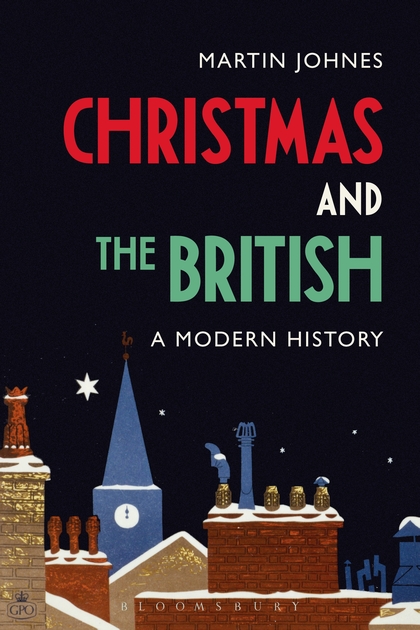
All taken from Martin Johnes, Christmas and the British: A Modern History (Bloomsbury Academic, 2016). 

The Political Aftermath of the Aberfan Disaster

Martin Johnes and Iain McLean

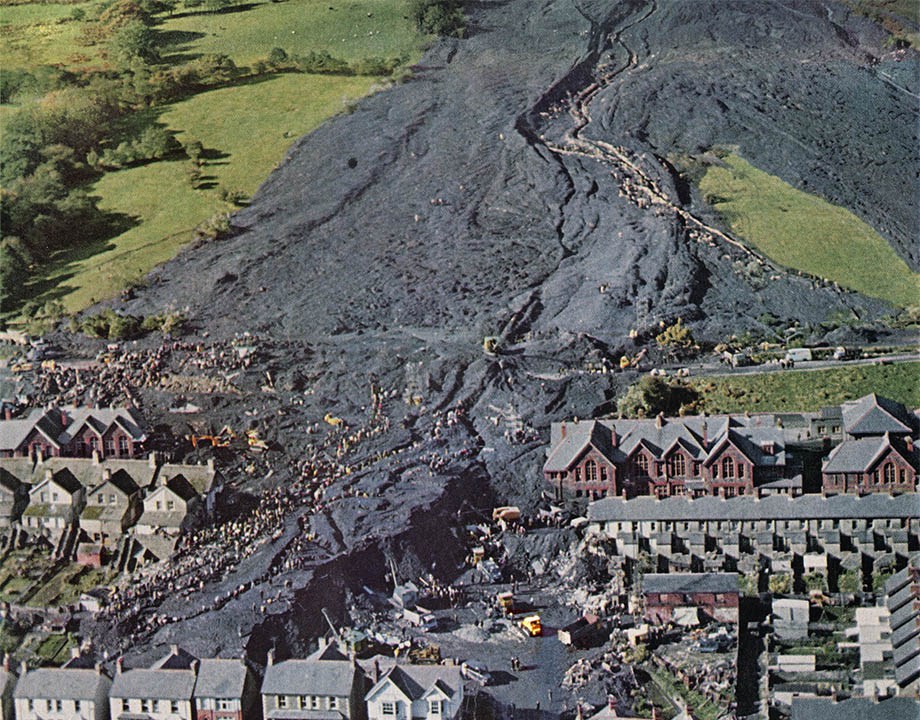
On Friday, 21 October 1966 a coal tip slid down a mountainside into the mining village of Aberfan in the South Wales valleys.  The slide engulfed a farm, around twenty houses and part of the local junior school before coming to rest.  The disaster claimed the lives of 144 people, 116 of whom were school children.  The horror felt around the world was made all the more poignant as news emerged of previous slides and brushed aside warnings.  Such was the widespread sympathy that was felt that a fund set up to help the village raised £1,750,000.

Image result for aberfan disaster

A terrifying tale of bungling ineptitude

In the days after the disaster, Lord Robens, chairman of the National Coal Board (NCB), attributed the tragedy to ‘natural unknown springs’ beneath the tip.  This was known by all the local people to be incorrect.  The NCB had been tipping on top of springs that are shown on maps of the neighbourhood and in which village schoolboys had played.  The government immediately appointed a Tribunal of Inquiry.  Its report was unsparing:

Blame for the disaster rests upon the National Coal Board … The legal liability of the National Coal Board to pay compensation for the personal injuries (fatal or otherwise) and damage to property is incontestable and uncontested.

These dry conclusions belie the passion of the preceding text.  The Tribunal was appalled by the behaviour of the NCB and some of its employees, both before and after the disaster:

the Aberfan disaster is a terrifying tale of bungling ineptitude by many men charged with tasks for which they were totally unfitted, of failure to heed clear warnings, and of total lack of direction from above

Colliery engineers at all levels concentrated only on conditions underground.  In one of its most memorable phrases, the Report described them as ‘like moles being asked about the habits of birds’.

The Tribunal endorsed the comment of Desmond Ackner QC, counsel for the Aberfan Parents’ and Residents’ Association, that coal board witnesses had tried to give the impression that ‘the Board had no more blameworthy connection with this disaster than, say, the Gas Board’.  It devoted a section of its report to ‘the attitude’ of the NCB and of Robens and forthrightly condemned both.

Corporate responsibility

In the face of the report, it now seems surprising that nobody was prosecuted, dismissed, or demoted or even said sorry.

It  is also surprising that Robens’ offer to resign as NCB chairman, which even at the time was seen as perfunctory, was rejected.  Public records released under the thirty year rule, show that he had advance sight of the tribunal report and his private office ran a media campaign to keep himself in place.  Through very public attacks on government fuel policy, he was able to portray himself as a defender of the industry and win the support of the unions.  This was not a new line for him to take but Robens was a great PR manipulator and he knew that he was securing his position.  Ministers let him stay, despite disliking him, because they thought he was the only man who could manage the decline of the coal industry and avoid strike action.  In effect, Robens’ behaviour after Aberfan became irrelevant to whether he kept his job or not.  Rather, political expediency was the name of the game.

Nobody suggested that Robens himself was to blame for the disaster but he was the head of the organisation that clearly was.  The extent of mismanagement revealed by the Tribunal was such that the question of prosecution arose in Aberfan and the media.  However the NCB itself avoided prosecution because the concept of corporate manslaughter was very much on the fringes of legal procedures.  Mining was a dangerous industry where accidents were normalised as an almost inevitable part of operations.  This is not to say that they were taken lightly but rather that they were seen as just that, accidents.

Accidents might be the product of individuals’ errors maybe but the idea that those errors could be fostered by a wider corporate culture that amounted to criminal negligence was simply not part of the contemporary agenda.  When the question of manslaughter charges was raised it was with regard to individual employees not the NCB itself.  Concepts of corporate responsibility, in and outside the coal industry, were essentially under developed.  Thus, despite the evidence to the contrary, the Aberfan disaster did nothing to challenge the picture of disasters as tragic accidents rather than criminal negligence.

A catalogue of self-serving episodes

Other events that now seem surprising followed Aberfan.  In August 1968, the government forced the trustees of the disaster fund to contribute £150,000 to the cost of removing the remaining NCB tips from above the village.  These tips were in a place and condition in which, according to the NCB’s own technical literature, they should never have been. Yet the board refused to pay and even undermined the efforts of a rival firm offering to remove the tips for less money that the NCB thought it would cost.

The contribution was bitterly controversial.  Some people wrote to ministers to complain that it was inconsistent with the charitable objectives of the fund; ministers’ replies did not address the point.  The Charity Commission failed to intervene or even query the debatable point on whether such a contribution was legal.  In contrast, it asked the disaster fund to ensure that parents were ‘close’ to their children before making any payment to them for mental suffering.

The villagers of Aberfan were traumatised  beyond the comprehension of outsiders who could see only their ‘unpredictable emotions and reactions’.  The trustees of Bethania chapel, which was used as the mortuary after the disaster, pleaded with George Thomas, the Secretary of State for Wales, to get the NCB to pay for it to be demolished and rebuilt, on the grounds that its members could not longer bear to worship there.  Thomas passed the plea on to Lord Robens, who rejected it.  Eventually it was rebuilt but at the expense of the disaster fund not the NCB.

The NCB paid just £500-a-head compensation to the bereaved parents.  To some parents this was insultingly low. Coal board lawyers, however, regarded it as ‘a generous settlement’ and it was not at odds with other contemporary payments of loss of life by a child.  Even as insurers wrangled, the ruins of the school and empty houses remained for a year.

For those in Aberfan, the legacy of this catalogue of self-serving episodes was a deep feeling of being let down and injustice.  The result is a lingering mistrust of authority.  It has also made the closure process difficult and undoubtedly hindered the healing process in the local community.  Subsequent events served to exacerbate that feeling.  In October 1998 the village suffered severe flooding.  An independent inquiry showed that the flooding was exacerbated by dumped spoil from the removed tips.  One survivor of the disaster and victims of the flooding said ‘I was buried alive in that tip in the disaster.  Now it’s the same tip again dumped outside my door.  It’s no wonder I am angry.’

A community on the periphery

George Thomas, Secretary of State for Wales and originally a teacher from the Rhondda, did initially protest at the decision to encourage the disaster fund to contribute to the payment of the removal of the tips.  But his lone voice in the cabinet was not sufficient and in the end he acquiesced in the plan and placed strong moral pressure on the disaster fund to ensure it too gave in.

There was considerable local anger but the South Wales valleys consisted of safe Labour seats.  All the major Labour figures knew that the rising Plaid Cymru support in the valleys was essentially just a protest that would pass.  The Labour hegemony thus condemned Aberfan to the margins.  In contrast, Robens’ ability to avert a coal strike was very much the concern of government and he kept his job as chairman of the NCB.

Gwynfor Evans, leader of Plaid Cymru, complained in the parliamentary debate on the disaster that if the tips had been at Hampstead or Eton, the Government would have taken more notice.  Aberfan was a small working-class community isolated from the heart of UK politics.  The government’s decision to grant legal aid to the Aberfan Parents and Residents’ Association at the Tribunal of Inquiry did mean they were able to afford the best ‘silk’ of the day.  The fearsome Desmond Ackner triumphed over the NCB at the Tribunal.  But in the aftermath of the disaster, a Labour government, whose support across South Wales was secure, ignored Aberfan’s interests.

The disaster itself, of course, was not marginalised.  The London media, Royalty, and the Prime Minister all travelled to Aberfan to see the horror for themselves.  It was only a few hours drive away or an even shorter flight.  Even Lord Robens got there, 36 hours later.  Politicians were undoubtedly personally touched by the disaster.  Harold Wilson noted that when he visited a Cornish school less than eight days after the disaster, he felt ‘almost a sense of resentment at these happy innocent children, with all they had to look forward to, compared with the children of that Welsh valley, who had no future.’  Intensive media coverage, particularly television, ensured that the disaster was seen as a national one.

Yet this was not enough to overcome the residents of Aberfan’s position on the political periphery, something that had contributed to the causes of the disaster and intensified the injustices after it. The disaster simply would not have happened had the NCB taken local fears about the tips more seriously or enforced its own rules on tip safety. But it was an organization hampered by mismanagement yet protected from market and political pressure by being part of the state and a dominant local employer.

Before the disaster, the NCB’s economic and local political power meant no one, including the small local authority in Merthyr, was able to challenge it to do more about fears on tip safety. After the disaster, the NCB’s economic and national power meant its interests took precedent over those whose children it had killed.

Martin Johnes and Iain McLean are the authors of Aberfan: Government and Disasters (Welsh Academic Press, Cardiff, 2019). 


Television, comedy and the historian

ImageI’m writing a book about Christmas since 1914 so I’ve been watching a lot of Christmas specials from the 1970s and 80s recently. Television has been rather underused as a source by contemporary historians because old programmes have always been difficult to get hold of.  However, the growth of people using Youtube to share things they buy on DVD or find on old VHS tapes (and television companies’ apparent willingness to overlook the copyright infringement) mean there is now online a wealth of ephemera from the small screen.

Just as with novels, the historical riches come not from the highbrow but from the popular.  The light entertainment of the past is an important source because it says so much about what people found funny and their everyday attitudes. It also reminds us just how much these attitudes have changed. The 1970s and 80s doesn’t seem that long ago but watching its television shows is a reminder of a world where sexism and racism were rife; pretty girls were there to be openly leered at and jokes about buses being like Calcutta were funny.

Humour is a complex phenomenon to study. Just because a script writer thought a joke was worth telling and a studio audience subsequently laughed doesn’t mean the audience at home reacted that way. Nor should we just accept viewing figures as measures of which shows reflected popular tastes. In a world of three channels, there wasn’t exactly much choice and many a person found themselves forced to watch something at Christmas to compromise or to keep the peace.

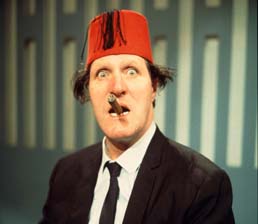
Then there’s the issue of how we escape our own tastes and, in the case of recent television, our own memories.  I did not find a 1970s Tommy Cooper Christmas special remotely funny. But was that me or was it always very silly? In contrast, the Good Life and the Two Ronnies have held up well and made me laugh. But then they did in the 80s too.

In contrast, as a kid I never liked repeats of Steptoe and Son. It’s still not very funny but it’s been far the most interesting watch in my research because it’s full of sociological comment. Yet interpreting that is not easy. When Albert sings ‘Enoch’s dreaming of a white Christmas, just like the ones he used to know’, are people laughing at or with Powell’s racism? In a society where race was a divisive issue, it was probably both.

Alas, I’m not sure that I’ve learnt too much about Christmas itself from these programmes but they were an integral part of the Christmas experience for the majority of the population. The research is thus probably more about getting into the mentality of the past rather than about finding out specifics, even if that does mean I need to try to lose the traces of that mentality that still exist in my memory.   If nothing else, I’m learning why light entertainment was so important on Christmas day.  At its best, it was very funny but it also enabled people to escape the kind of domestic quarrels that they were watching depicted on screen.  And in some families that was probably worth putting up with a bit of Tommy Cooper.

Ought we to feel bitter against the English now? (1910)

If you and I had lived in the time of Llywelyn the last, no doubt we should have felt very bitter, when we saw our friends killed, our lands torn from us, and our families cruelly treated by a nation that could not excuse themselves by saying they were bringing us the gifts of civilization.

Ought we to feel bitter against the English now? If you will think of this carefully, you will see the answer is “No.” Englishmen are no longer free to harm our friends, or take away our lands, or treat our families cruelly. The law protects a Welshman from a bad Englishman in exactly the same way as it protects an Englishman from a bad Welshman. In law, Welshmen and Englishmen are equal.

William Glover, Stories from Welsh History (1910).

Historical research: voyages of discovery

I spent some time today talking to second-year students about the dissertations they will be doing next year. I don’t know about the students but I enjoyed the session. I did, however, sense a degree of apprehension in the audience.

Setting out on a new historical project is always daunting. You worry about whether there will be enough sources, whether they will tell you anything interesting, whether you will be able to understand them at all. You wonder whether anyone will care about what you are doing. For students the apprehension is worse because a dissertation is a new experience.

But there is also the excitement of challenging old ideas, of finding out new things, of being one of a select few to handle an old document. There’s also a sense of exploration and discovery in historical research.

The reality, however, is that most historical research doesn’t discover anything astounding. Historians tend to explain the world, rather than change it. And even the bits they explain tend to be rather small. The value of historical research is in its totality rather than in its individual components.

I don’t want to discourage students from studying big events and important people. There are, after all, plenty of good things that can be done with the careers of kings and queens and the courses of wars and rebellions .  But I also want them to remember that the best dissertations are often very specific studies of things that on the surface might not seem that important.

It’s in studying the ordinary, mundane and the obscure that knowledge can really be extended and challenged. It’s by looking at the events, places, peoples and behaviours that aren’t normally remembered that even student dissertations can be voyages of discovery.

“History isn’t the lies of the victors, as I once glibly assured Old Joe Hunt; I know that now. It’s more the memories of the survivors, most of whom are neither victorious nor defeated.”

From Julian Barnes, The Sense of an Ending (2011).

Two voices of reason from football’s past

A letter from a Cardiff City fan to the South Wales Echo (3 Dec. 1927) that the club’s present ownership would do well to think about.

“The true position with the City at the moment has nothing to do with the players but concerns the management, and I’m afraid that unless they consider a little more of the wishes of the supporters they will kill the bird that lays the golden egg.  If the directors would mingle with the crowd, instead of being perched like tin gods in their reserved stands, they would find that what I say is true.”

A letter to the South Wales Echo (23 Feb. 1922) that the owners of all clubs would do well to think about.

“If the City is to maintain the good feeling of its supporters, it would be wise to give all classes an opportunity to see the match, because, after all, the working man is the backbone and stay of the club. It is a pity that the directors should confuse and misconstrue sport for greed, and remember the story of the magical goose.  If the directors cater only for the rich they will find that class deserting them in times of trouble.”

The first major trophy?

There is currently some criticism of the fact that both the media and Swansea fans are calling the League Cup Swansea’s first major trophy. This is being taken as an insult to the Welsh Cup, a trophy Swansea first won in 1913. However, as this extract from my book Soccer & Society: South Wales 1900-39 argues, between the wars the Welsh Cup was simply not regarded as an important competition by the football community in south Wales.


Despite its national consciousness and patriotic celebrations, inter-war soccer in south Wales was essentially bound to the wider English club scene and it paid little regard to all-Wales competitions such as the Welsh Cup and League.  Before 1914, the emerging soccer fraternity in the south had seen the Welsh Cup as an important route to establishing its credentials but, after the war, with local teams now playing in the higher standard and more prestigious Football League, the competition lost its appeal.  Cardiff City et al. rarely fielded their first teams in the cup and even the date of the final was often fitted around southern clubs’ league fixtures.  Matches were generally not well attended and the local press rarely made any effort to hype the games.  The venue of the 1920 Welsh Cup final was moved from Cardiff to Wrexham because it was felt that the latter town’s team would not attract a large crowd in the south where crowds were used to watching the higher standard Southern League soccer.  For the clubs from the south, becoming champions of Wales held no appeal compared with the possibility of success on the English stage that the Football League and FA Cup offered; prestige was about recognition from outside Wales, not from the politically, culturally and economically distant north.

In contrast, clubs from the north were eager to use the Welsh Cup to proclaim their equality and there was a sense of regret about the south’s apathetic attitude.  This attitude may have been different had north Wales possessed enough clubs of a sufficient standard to challenge consistently for the trophy.  However, between 1920 and 1939, the trophy was only won five times by teams from the north.  In the hope of raising the competition’s status, the FAW invited English clubs to enter in the 1930s.  Yet that failed to raise interest in the south.  The English teams that entered were mostly small clubs from the counties that bordered north and mid Wales and meant little to the inhabitants of south Wales.  The only result was embarrassment for the FAW as the trophy left Wales on seven occasions during the 1930s.  The FAW appealed for stronger efforts to bring the cup back to Wales but the calls fell on deaf ears amongst south Wales clubs whose eyes were focused on the more prestigious English competitions.

Victorian toilets

There’s a set of Victorian underground public toilets in the middle of Cardiff. They can be a bit smelly and you probably wouldn’t want to linger in there too long.  But the steep stairs, posh antique ceramics and faint aroma mean there are very few places in Britain with such character to relieve yourself.

Picture reproduced from http://www.flickr.com/photos/auntiep/52545766/ under the Creative Commons licence (non-commercial use).

The local authority plans to close it down. They’ve got no cash and don’t want to raise council tax. It’s a thankless task running a council – whatever choices you make, there’s someone who will object.  And while I don’t have any suggestions for other ways to save the £92,000 the Victorian ‘public conveniences’ in the Hayes apparently costs a year, closing them just isn’t a good idea.

I don’t say this as a historian who objects to the destruction of all historic monuments. Not everything needs preserving. Sometimes you have to move on. The Victorians understood that. They believed in progress.  But this isn’t about progress. The toilets are not going to be replaced with anything, modern or otherwise.

The Victorians also believed in civic pride and building public infrastructure like these toilets was not just about providing facilities; it was about building a community to be proud of.

Modern cities aren’t always big on character. Central shopping areas rather lack in the eccentric or anything much which makes them different from their commercial rivals. However, the Hayes toilets are part of what makes Cardiff memorable. They are much as a part of its city centre as the castle and the statue of Nye Bevan. For visitors they’re something to remember and for locals they’re something to cherish and be proud of.  Few other cities can boast facilities that make people remember taking a pee.

Cardiff is increasingly marketing itself as a distinctive city. It’s been quite successful as a venue for weekends away. Of course, the visitors are tempted by sport, shopping, drinking and Dr Who, not the prospect of a visit to a Victorian toilet. But still, closing one of the things that makes the city distinctive seems shortsighted.

So much of the character of Cardiff was built by Victorians proud of where they lived. They created a modern city.  The city’s council has done much in the last 30 years to build on and take forward that Victorian civic pride. Cardiff has reinvented itself into a modern city but what has enabled that reinvention to be successful is the way it has utilised the city’s past to make the Welsh capital distinctive.

The Hayes toilets are part of the city’s heritage.  They are not being closed in the name of progress but in the name of saving money. Yet sometimes heritage has an immeasurable economic value in itself, even when it sometimes smells a bit.

You can sign the petition to save the Hayes toilets here: https://www.change.org/en-GB/petitions/cardiff-council-to-save-the-hayes-victorian-toilets

There are some photos here http://www.flickr.com/photos/roath_park_mark/sets/72057594052332359/